Ileostomy
What is a stoma?
The word "stoma" originates from the Greek word meaning mouth.
What is an ileostomy?
The name given to the stoma depends on the part of the bowel used. An ileostomy is formed when any portion of the small intestine is brought out onto the skin of the abdomen to divert the removal of body waste (faeces). An ileostomy allows the faeces to be removed from the body without passing through the large bowel. An ileostomy may be temporary or permanent.
|
|
|
||
|
The end of the intestine is pulled |
The intestine is then folded outward onto itself and attached the abdomen with stitches. |


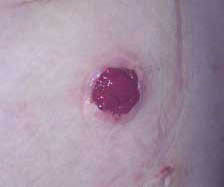
What does an ileostomy look like?
A ileostomy may vary in shape and size, the stoma may be round or oval, and pouting; it may be as small as one centimetre or as large as five centimetres. The stoma looks like the tissue in your mouth, it is soft, moist and pink to red and has no feeling. If you watch it closely you will see it moving this is called peristalsis.
Why is an ileostomy required?
You are likely to have an ileostomy:
-
If you are admitted to hospital because your bowel is blocked or perforated (has a hole in it), this is considered an emergency - the ileostomy may be temporary or permanent
-
To protect the anastomosis or join when a portion of the bowel has been removed - the ileostomy is usually temporary
-
You may have a cancer that your doctor cannot remove and it may be necessary to bypass the diseased portion of the bowel - the ileostomy will be permanent
-
If your disease necessitates that you have your large bowel, rectum and anus removed you will require a permanent ileostomy
-
Trauma - the ileostomy may be temporary or permanent
What conditions may make an ileostomy necessary?
-
Trauma to the bowel
Many people are very apprehensive about the effects a
stoma will have on their lives. You will need support and understanding
of your families and friends. The nurses, doctors and stomal therapy
nurse are here to help you get through this time.
For people with ileostomies, your stomal therapist will help you join
the ileostomy association
Useful Contacts and Further Information
Concord Hospital has an internationally recognised
Colorectal Unit and Stomal therapy department and can be contacted on
97678360 and 97676761 respectively.
Contact your General Practitioner
Ileostomy Association of NSW
West St Lewisham, NSW
Telephone: 9568 2799
Fax: 9564 2064
Hours: Tuesday - Thursday 10 am - 2 p.m.
|
|
