
 Transplantation Services
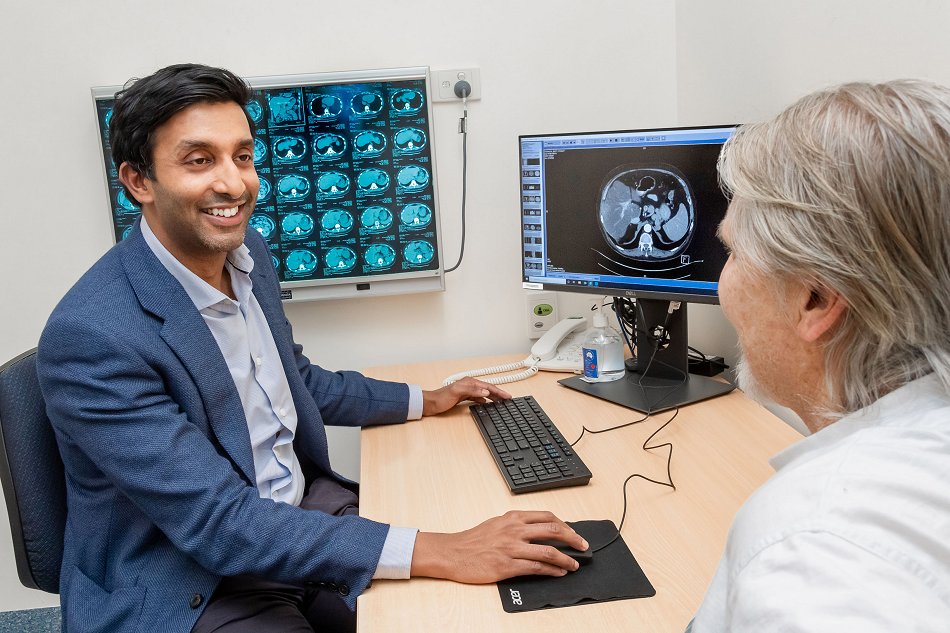
Transplant assessment
Many people live for years unaware that their liver is damaged and will not require transplantation. For those with severe or advanced liver diseases, liver transplantation may be an option in the following circumstances:
- irreversible, progressive liver disease
- the liver disease fails to respond to all other forms of medical and surgical treatment
- absence of other major diseases
- ability to understand the nature and risks of liver transplantation
The liver transplant physician (hepatologist) will assess the severity of your disease and can start the process for you to be considered for a liver transplant. They will work with a transplant coordinator to manage, treat and coordinate your care.
Your tests to assess suitability
While undergoing assessment for a transplant, you will need to undergo a number of tests. The process usually takes two to six weeks to complete, but varies depending on the availability of test procedures and complexity of individual cases.
All patients need to undergo baseline tests, and extra tests are tailored to the individual situation. For many people, these tests are performed on an outpatient basis (which means there is no need to stay overnight in hospital).

- blood tests
- screening for viruses or hepatitis
- X-rays
- Computed Tomography (CT) scans
- heart assessment
- lung assessment
- endoscopy
- dental check
- nutritional assessment
- surgical and anaesthetics review
The test results provide an overall assessment of your current state of health, and will help determine whether a transplant is a suitable option for you.
Your assessment
Once your test results are available, your hepatologist will meet with the Australian National Liver Transplantation Unit (ANTLU) to discuss your suitability for a liver transplant.
They could recommend one of the following:
- you are considered suitable for transplant, and the severity of your liver disease warrants your name being placed on the active waiting list. Your details will be entered onto a confidential national registry and our local transplant waiting list
- you are considered suitable for transplant, but deferred for an indefinite period because your quality of life remains good in the context of the symptoms and severity of your liver disease. If this is the recommendation, you will remain under the care of your referring physician, who stays in contact with the hepatologist at RPAH.
- you are not considered not suitable for transplant. Your hepatologist will discuss appropriate care for you, which may include continued review by the ANLTU hepatologist or returning to the physician or hepatologist who originally referred you
Your hepatologist will discuss the recommendation with you and your family, so you can make a decision. Even if you are suitable for a transplant now or later, you retain the right to decide that you would prefer NOT to undergo transplantation. The team will respect your decision.
Survival chances
Liver transplantation is a major operation. The 1-year post-transplant survival is about 90%, and the 10-year survival is 70%. While the chance of dying within the first year approaches 10%, we have seen a year on year reduction in death after transplant in the 30 plus years we have been performing them.
Non English speaking background (NESB)
For NESB Patients who do not speak English who present for assessment can use our Sydney Local Health District Health Interpreter Service, to ensure effective health care communication. There is no cost to patients for this service.
People with Disabilities
Like anyone in NSW, a person with a disability may require a transplant assessment. We endeavor to accommodate all referrals on a case-by-case basis and make reasonable adjustments as required. The decision to proceed will be based on the individual's needs and goals.
© 2026 Sydney Local Health District | 

Disclaimer | Privacy Statement | Accessibility
Page Last Updated: 31 March, 2021